
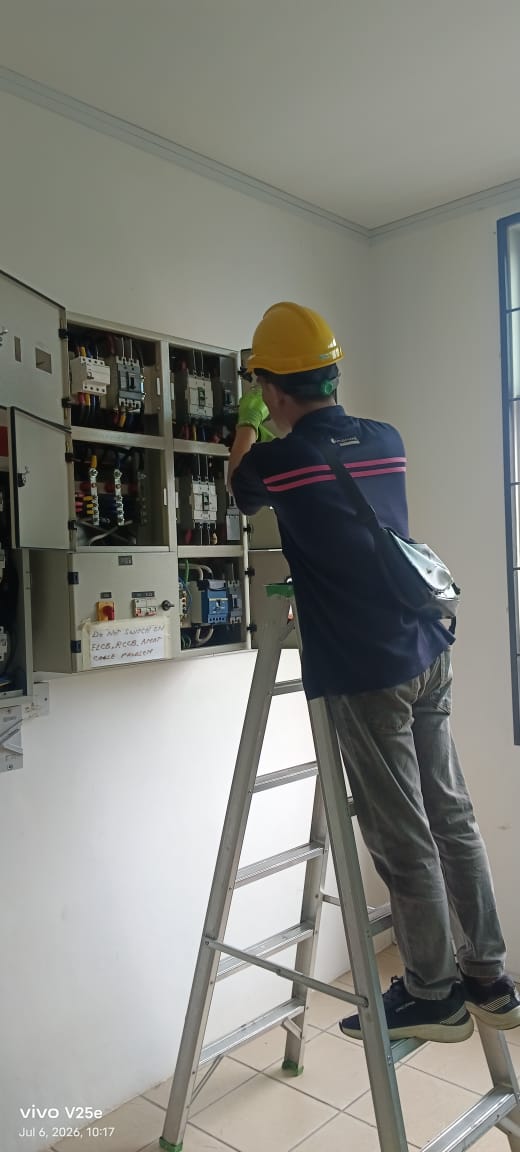
Project Date: 6 July 2026
Our team was called to inspect a church building that had reported an imbalance in its three-phase electrical supply. An initial inspection was carried out using a digital clamp meter to measure the current on each incoming phase.
Initial Current Measurements
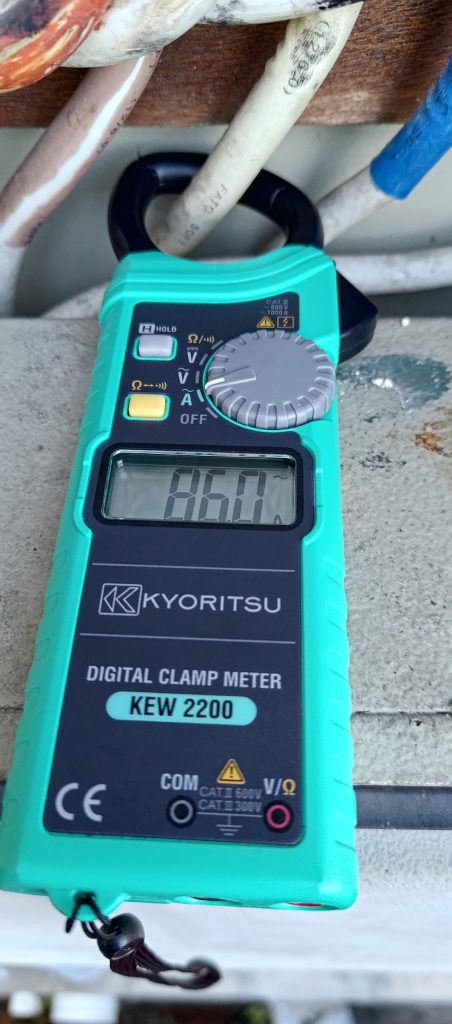
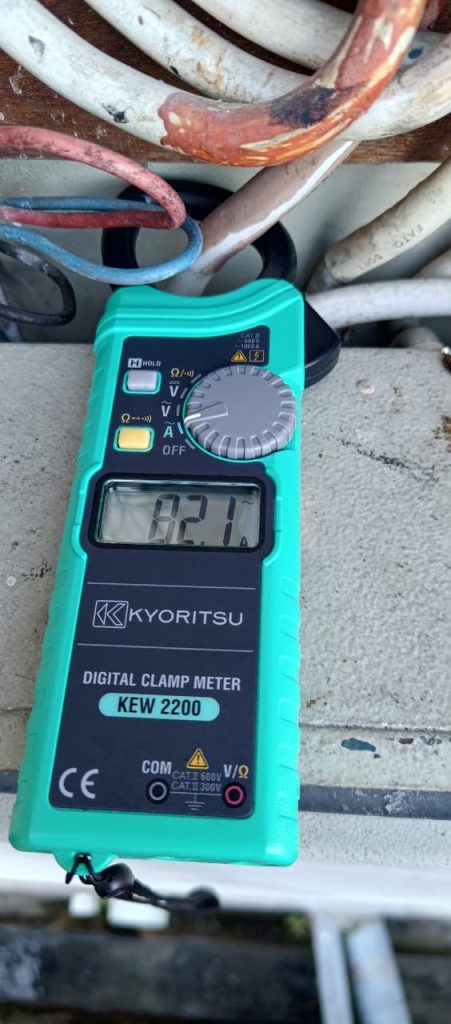
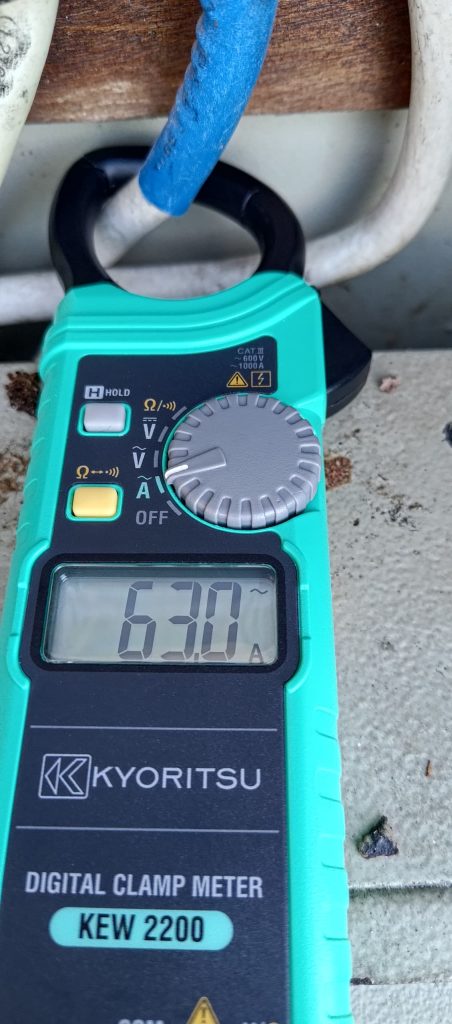
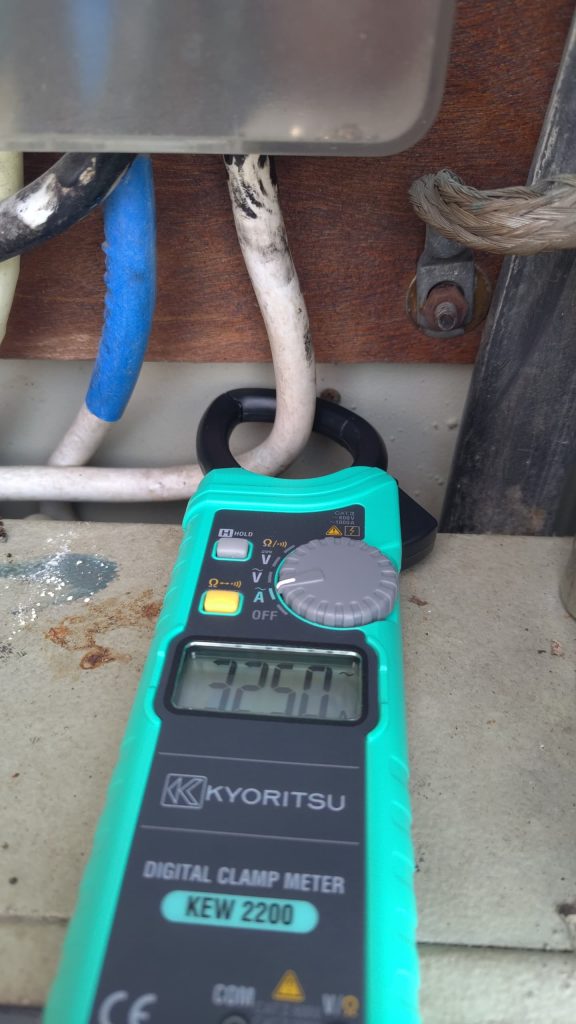
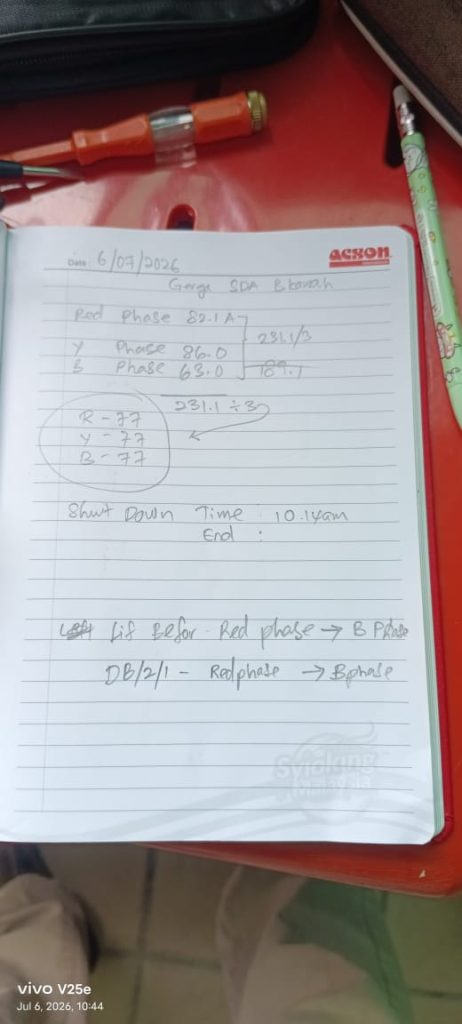
The measured load currents were:
| Phase | Current |
|---|---|
| Red (R) | 82.1 A |
| Yellow (Y) | 86.0 A |
| Blue (B) | 63.0 A |
Total Load: 231.1 A
The ideal balanced current would therefore be:
231.1 ÷ 3 = 77 A per phase
This showed that the Blue phase was carrying significantly less load than the Red and Yellow phases.
Load Balancing Process
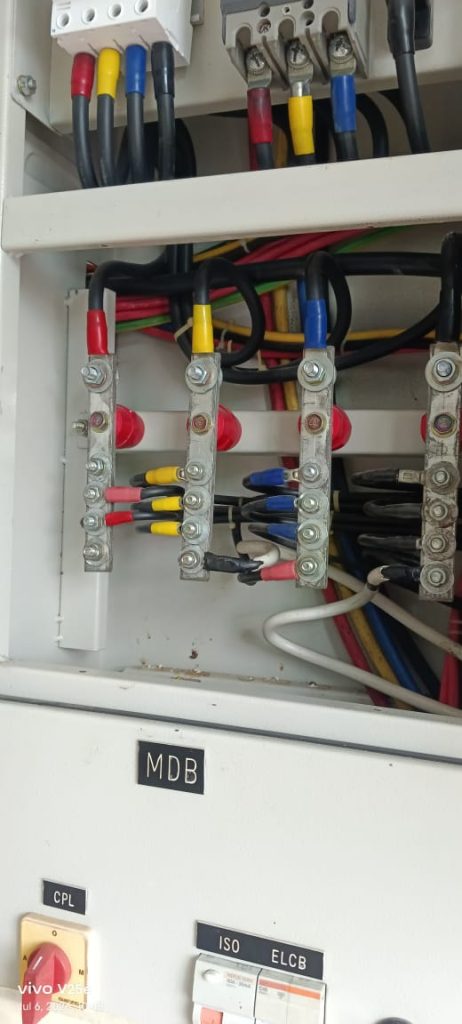
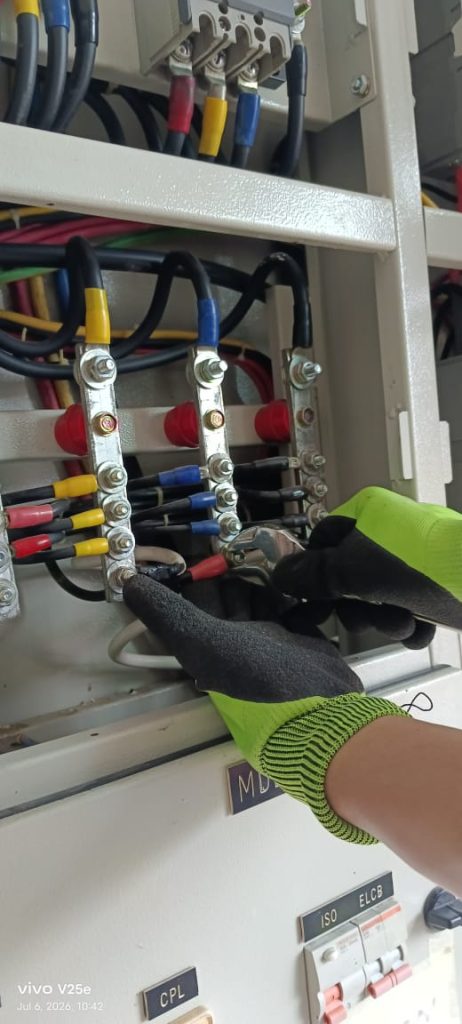
To improve the load distribution, one outgoing circuit from Distribution Board DB2/1 was transferred from the Red Phase to the Blue Phase.
This is a common and effective method of balancing loads in three-phase installations without altering the electrical demand of the building.
Why Load Balancing is Important
An unbalanced three-phase system can result in:
- Higher neutral current
- Uneven loading of transformers and switchgear
- Increased cable heating
- Voltage imbalance
- Reduced efficiency of electrical equipment
- Higher maintenance costs over time
Although a perfectly equal current on all three phases is rarely achievable in commercial buildings, reducing the difference between phases helps improve the overall performance and reliability of the electrical installation.
Observations
The inspection found:
- Total building load: 231.1 A
- Average target per phase: 77 A
- Existing phase currents ranged from 63 A to 86 A
- One circuit was successfully reassigned from Red Phase to Blue Phase to improve the balance.
As electrical loads such as air conditioners, lighting, and audio systems switch on and off throughout the day, phase currents naturally fluctuate. Therefore, load balancing aims to achieve a practical and acceptable distribution rather than perfect equality.
Our Services
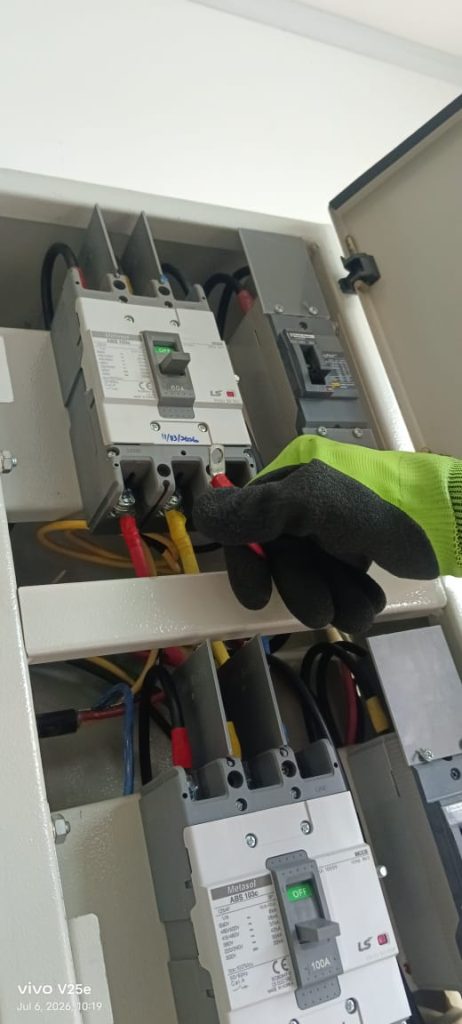
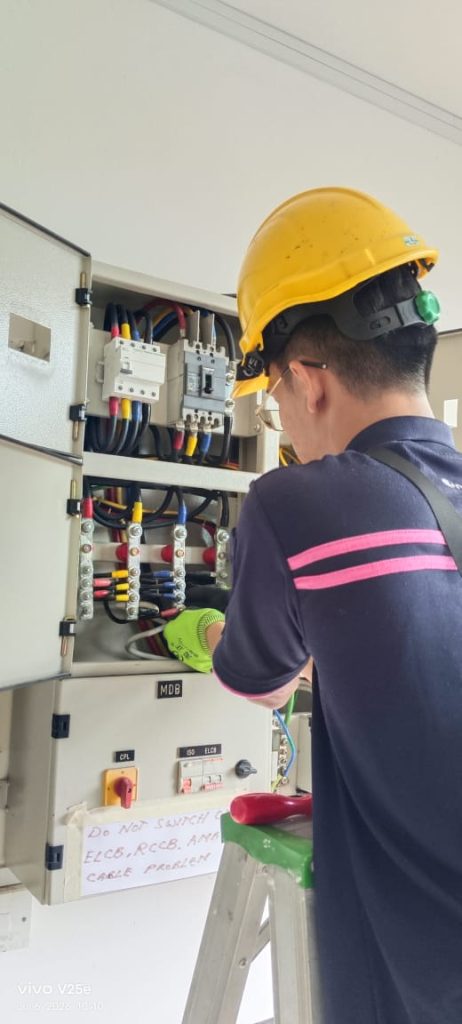
Our team provides:
- Three-phase load balancing
- Electrical troubleshooting
- Main switchboard inspection
- Current and voltage measurements
- Preventive maintenance
- Thermal inspection (where required)
- Commercial, industrial and institutional electrical maintenance
If your premises experience frequent circuit breaker tripping, flickering lights, or suspected phase imbalance, a professional electrical assessment can help identify the cause and improve system reliability.
The Disclaimer
Note: The current readings shown were taken at the time of inspection. Electrical loads continuously change as equipment is switched on and off. Therefore, phase currents will naturally vary throughout the day, and load balancing aims to achieve the most practical distribution under normal operating conditions.